


Bridging 100 Years of Mingei History: Marty Gross on the Path of the Film Archive
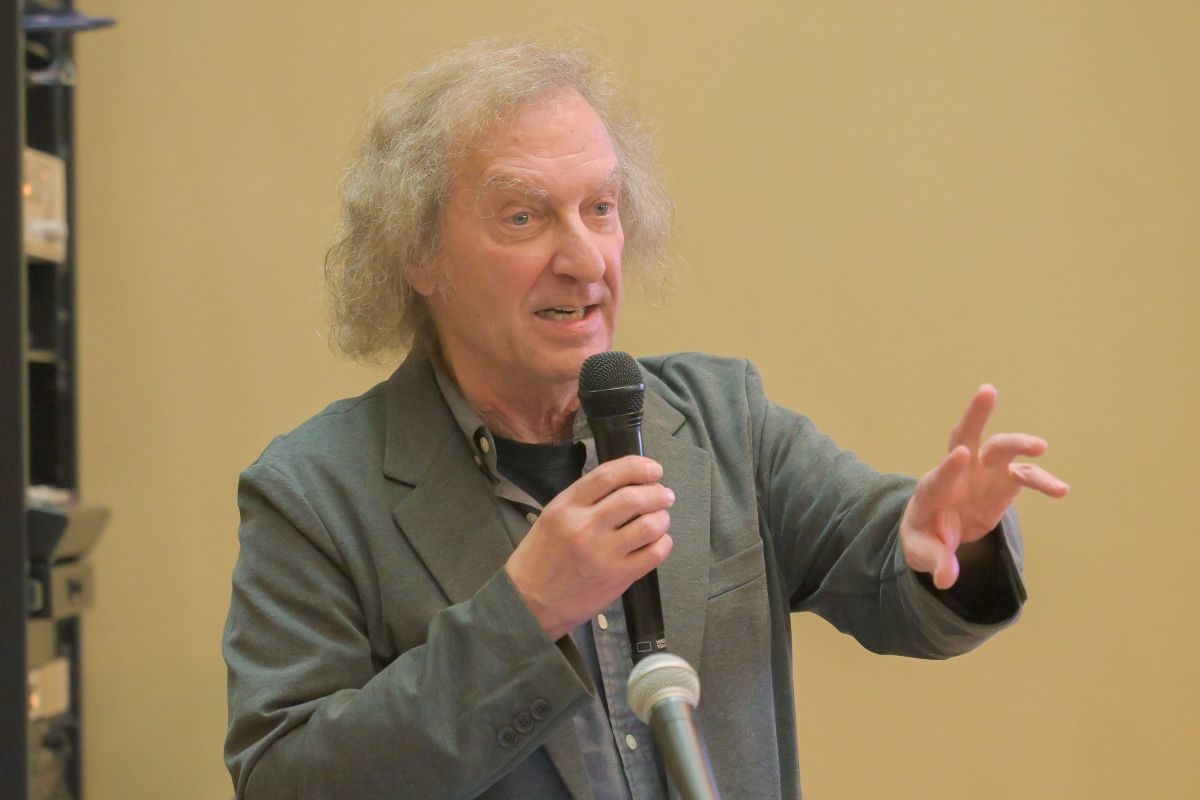
On October 24, 2025, a commemorative lecture by Marty Gross―recipient of the 52nd (FY2025) Japan Foundation Award―was held at the National Noh Theatre. Since his first visit to Japan in 1970, Gross has spent over half a century introducing Japanese traditional culture to the world through film. He was presented with the Japan Foundation Award in recognition of these contributions to the international dissemination of Japanese culture and to mutual understanding. Marking the centennial of the term mingei (folk craft) in Japan, the lecture traced the evolution of the Mingei Film Archive, which restores and makes public invaluable records related to the mingei movement and to craftmaking in general, and underscored Gross's dedication to cultural stewardship through moving images. This article presents excerpts from the lecture, highlighting the project's behind-the-scenes story and the films presented two days after the award ceremony.
Marty Gross, Producer/Director, Marty Gross Film Productions Inc.
Canada-born. Since his first visit to Japan in 1970, he has directed documentary films on themes such as ceramics and Bunraku theater, sharing their artistic value abroad and continuing for more than half a century to communicate the appeal of Japanese culture worldwide. He has also worked as a consultant on Japanese cinema, helping classic films find international audiences and recording valuable testimonies of the value of Japanese cinema throughout history. Through the Mingei Film Archive, he has personally collected and restored documentary footage shot in the 1930s by figures including the British potter Bernard Leach, and published it on in galleries, museums and screening events, etc.―reviving and documenting the techniques and lives of craftspeople of the time and carrying them forward into the future.
Restoring Archival Footage and Overlaying Contemporary Artisans' Commentary
【Screening Program】
- "Restoring and Enhancing the Films of the Mingei Film Archive" (2017; first shown at the "ATELIER MUJI Exhibition")
- Mashiko Village Pottery 1937, commentary by Sakuma Fujiya (recorded in 2017, Mashiko)
- The Textiles of Okinawa, commentary by Shukumine Kyoko (recorded in July 2024, Naha)
- Japanese Paper 1938, commentary by Sawamura Masashi (recorded in July 2022, Mino, Gifu Prefecture)
- How to Make a Cypress Wood Hat, commentary by Hashiba Chiemi (recorded in March 2024, Nagiso, Nagano Prefecture)
A cornerstone of the Mingei Film Archive is digitizing original film footage. Many of the 16 mm films preserved under the banner of mingei show deterioration such as dirt, scratches and mold, so the first step is restoration using digital techniques to obtain clear images. When we mounted the 2017 exhibition "Mingei Film Archive: In Search of Nameless Beauty 1934-2017" at ATELIER MUJI in Yurakucho, Tokyo, we realized it was better to demonstrate the process rather than to explain it in words. So, for this exhibition we produced a special film for that purpose (Screening 1). The archive's work always begins with this kind of digital conversion.
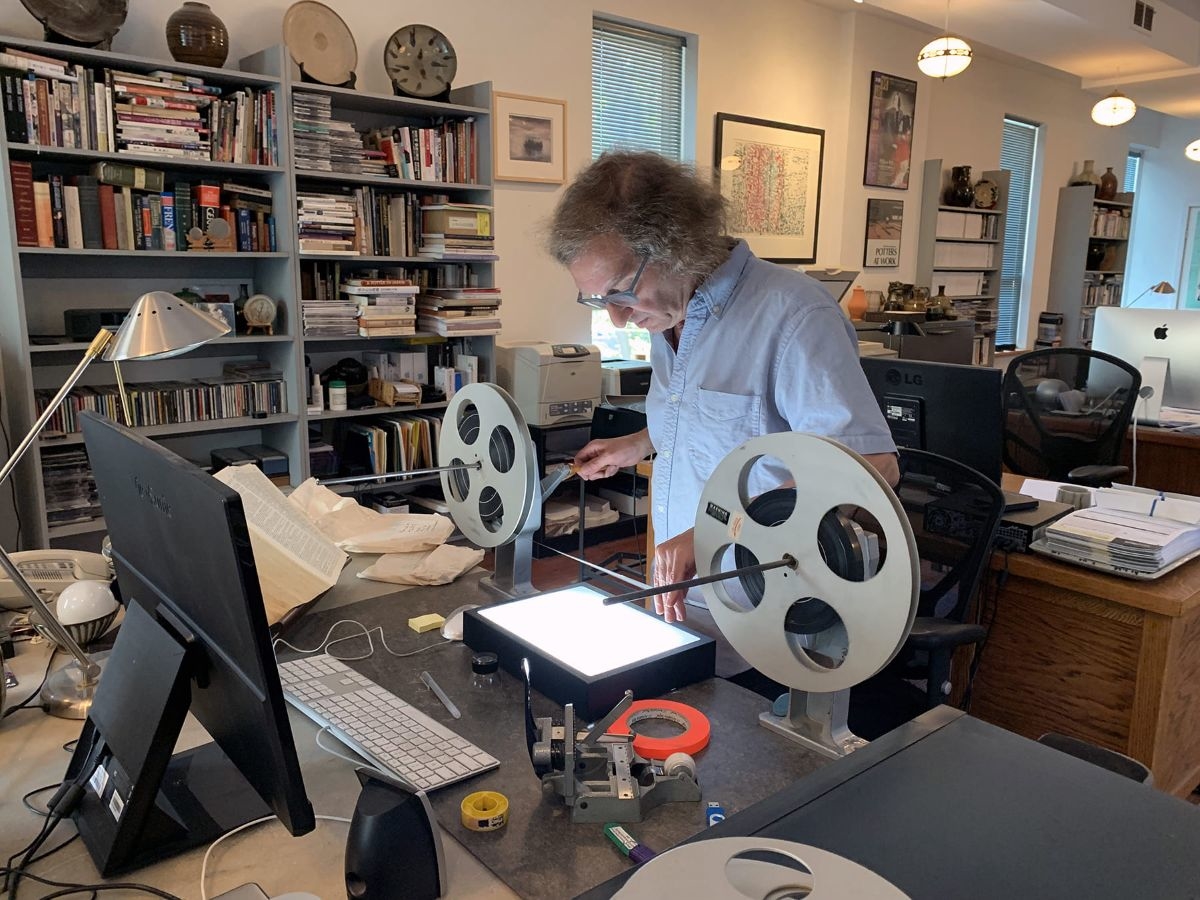 Removing dust from 16 mm film at Gross's office in Canada. (Photo from Restoring and Enhancing the Films of the Mingei Film Archive)
 To start, we remove dust from the 16 mm film elements, clean them, then scan digitally, sometimes creating comparison samples showing before/after restoration. Then the commentaries and subtitles are added. For the audio, we record and insert the voices of the artisans themselves or sometimes related parties. Music appropriate to the subject may also added at this stage.
When the project began, I was planning to write scripts based on interviews with the artisans and then create a formal commentary. But while working on Mashiko Village Pottery, 1937 (Screening 2), I met Sakuma Fujiya, fourth-generation head of the Totaro Kiln in Mashiko. The stories he told―in his own voice, about family, work, and the details of each task―resonated deeply with me. So instead of a conventional narration, we adopted an oral-history approach that uses the artisans' own words.
The Mingei Film Archive Began with a Bernard Leach Connection
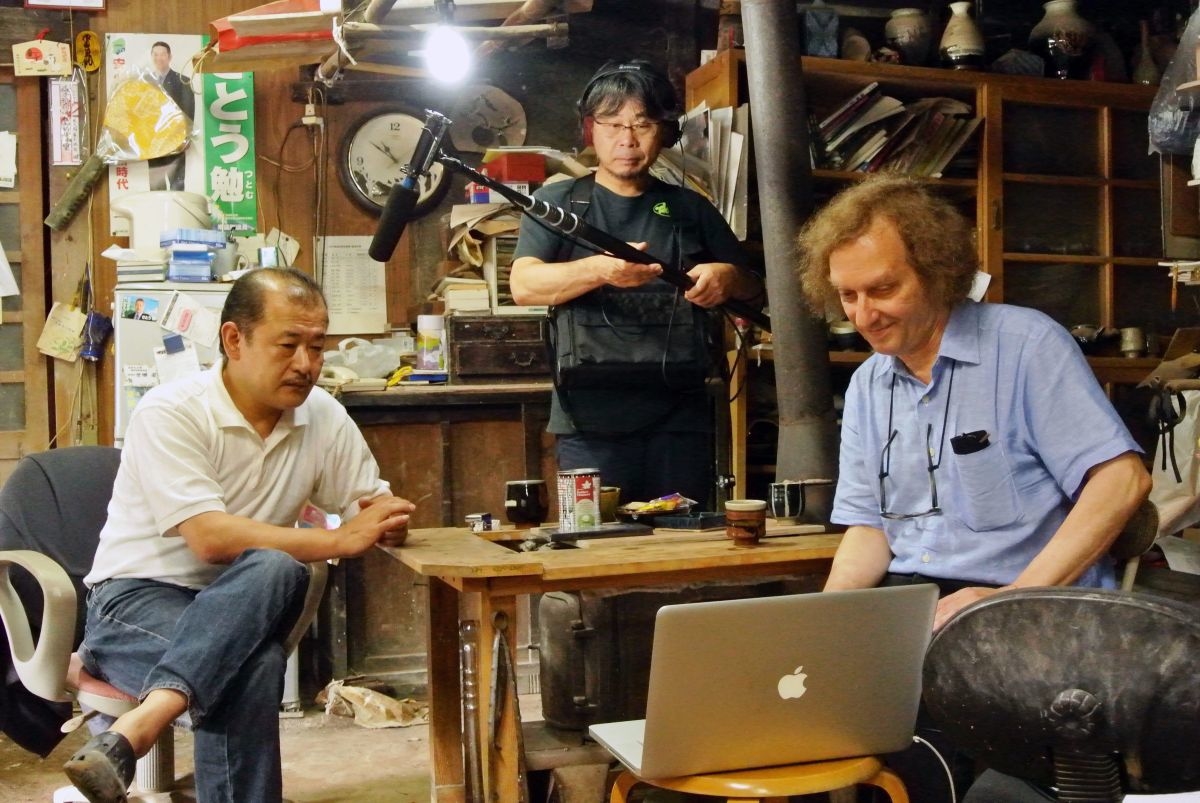 Gross screens the restored digital footage for Sakuma Fujiya (left), fourth-generation head of the Totaro Kiln in Mashiko, while recording his commentary. (Photo from Life and Work in Mashiko in the 1930s)
Mashiko Village Pottery, 1937 (Screening 2) was the first work in what has become the Mingei Film Archive. The original 16mm film reels came from the collection of the renowned British potter Bernard Leach.
In 1975, I visited the Leach Pottery in St Ives, England. I was then planning the production of my own film Potters at Work about potteries in Onda in Oita and Koishiwara in Fukuoka. Inspired by Leach's book A Potter in Japan, I had learned he had made 16mm films in Japan in the 1930s documenting pottery-making. I very much wanted to see these. Leach, who was elderly at the time, was also concerned about the future of these films. I took custody of these precious reels, brought them back to Canada, and restored them. Other films in Leach's collection had originally been produced by the Society for International Cultural Relations―the predecessor to the Japan Foundation―and the Japan Foundation agreed to support the restoration.
In 2014, I asked Sakuma Fujiya to view the restored film while I recorded his comments on the daily lives of the potters and the techniques of Mashiko ware; I later added his voice to complete the new film. His great-grandfather Fukujiro, who was celebrated for his handled teapots, is also shown.
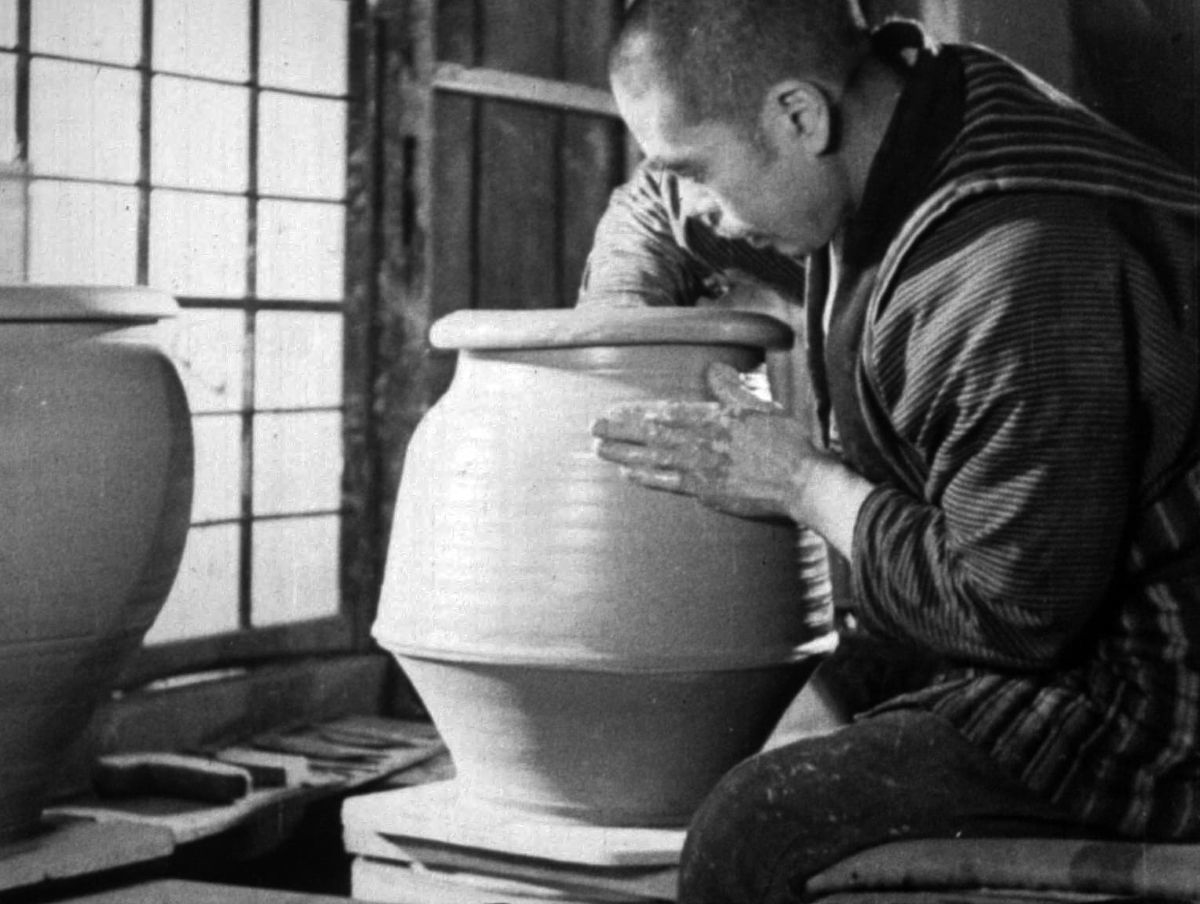 Pottery worker at Totaro Kiln in Mashiko 1937
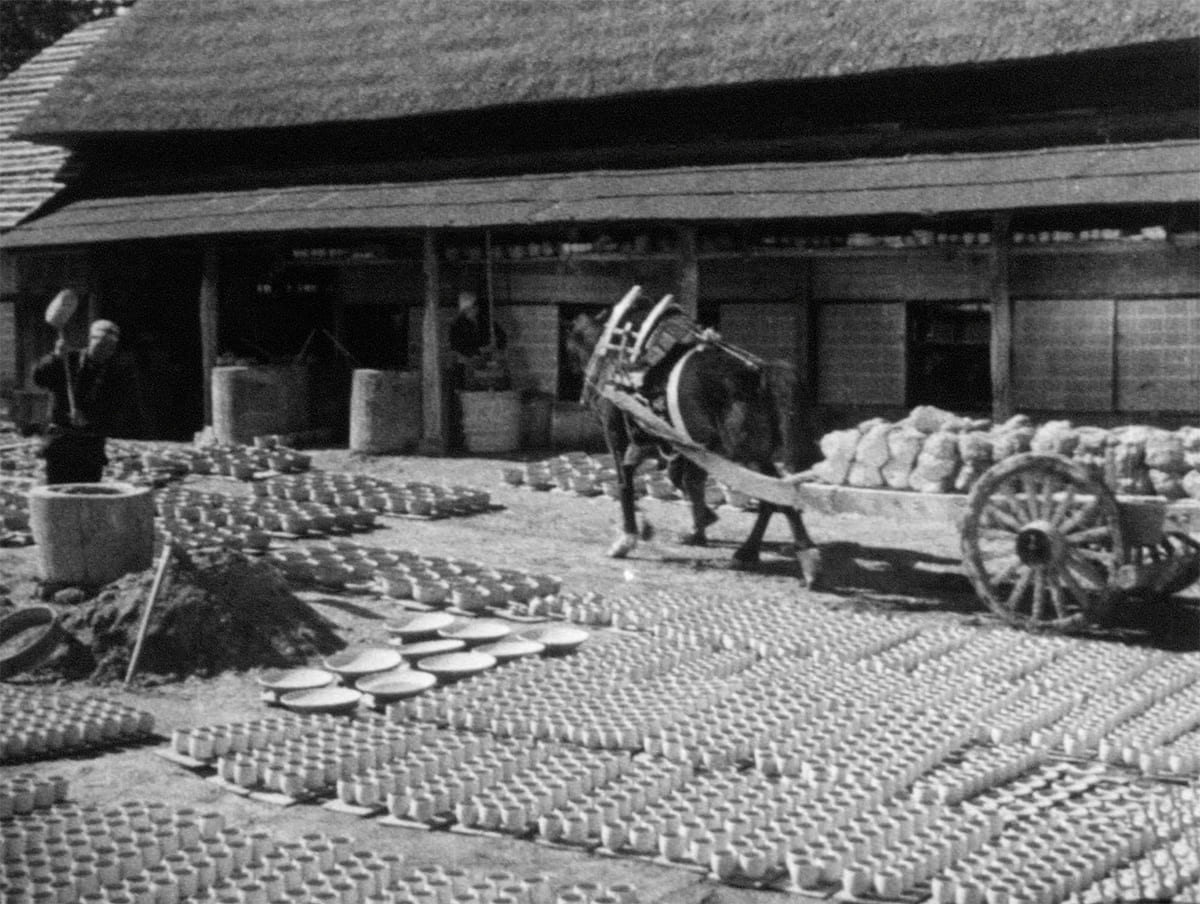 Drying unfired pottery; the film also captures scenes of Mashiko in the era when the mingei movement took root.
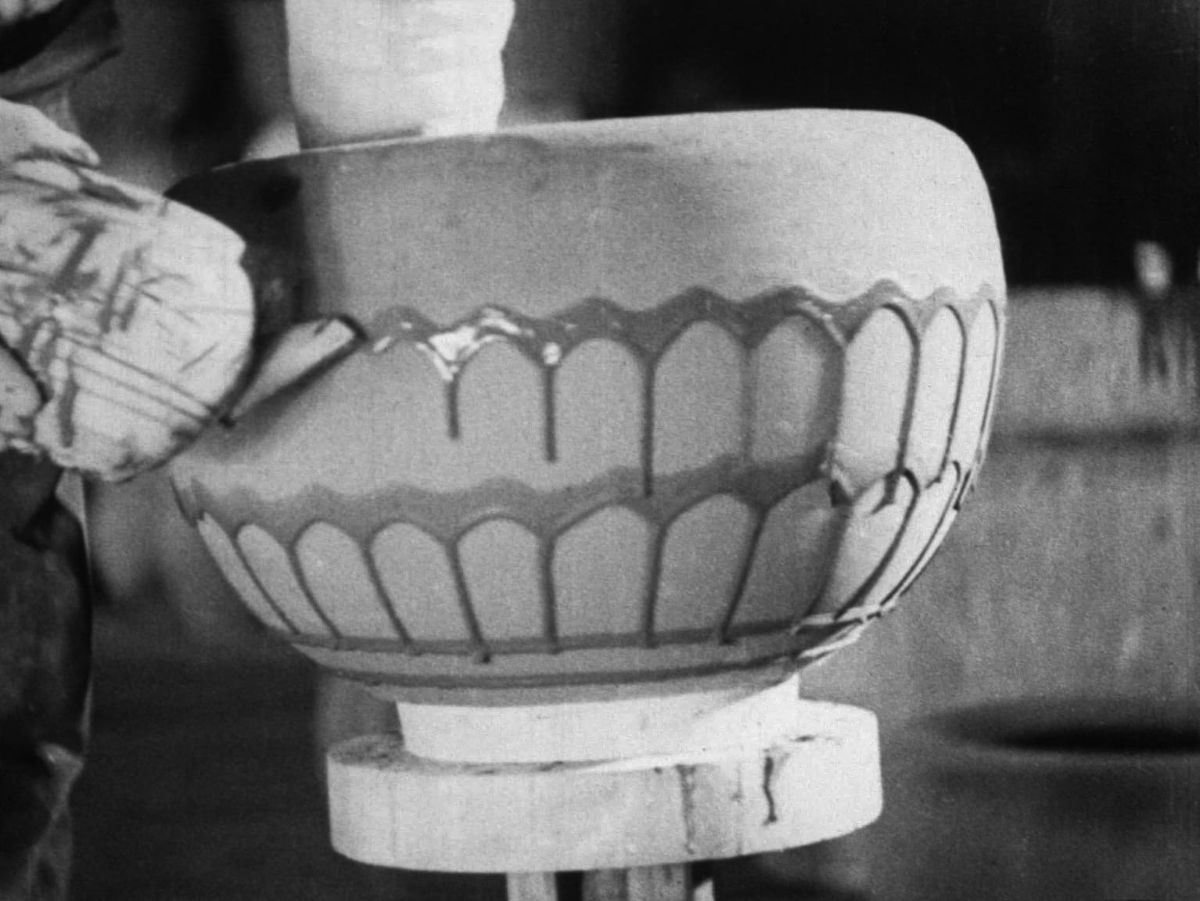 Hand-applying glaze; the potter adjusts both the amount of glaze and the rotation to achieve an even pattern.
※ All stills from Mashiko Village Pottery, 1937
Encounters with Priceless Films and Captivating Artisans
The reels entrusted to me by Bernard Leach and those lent by the precursor to the Japan Foundation were true period artifacts, already roughly half a century old when I began restoring them. Time had made them fragile; some had mold and a bad odor, so the restoration work was arduous.
I found other films that had been sleeping for decades in private collections. The Textiles of Okinawa / Mingei in Okinawa 1940 (Screening 3) presents 1940s footage of bashofu (banana-fiber cloth) production, with commentary by textile artist Shukumine Kyoko. The original film, shot in the 1940s, had been carefully wrapped in a furoshiki and stored at the Japan Folk Crafts Museum, where it was effectively forgotten for about seventy years.
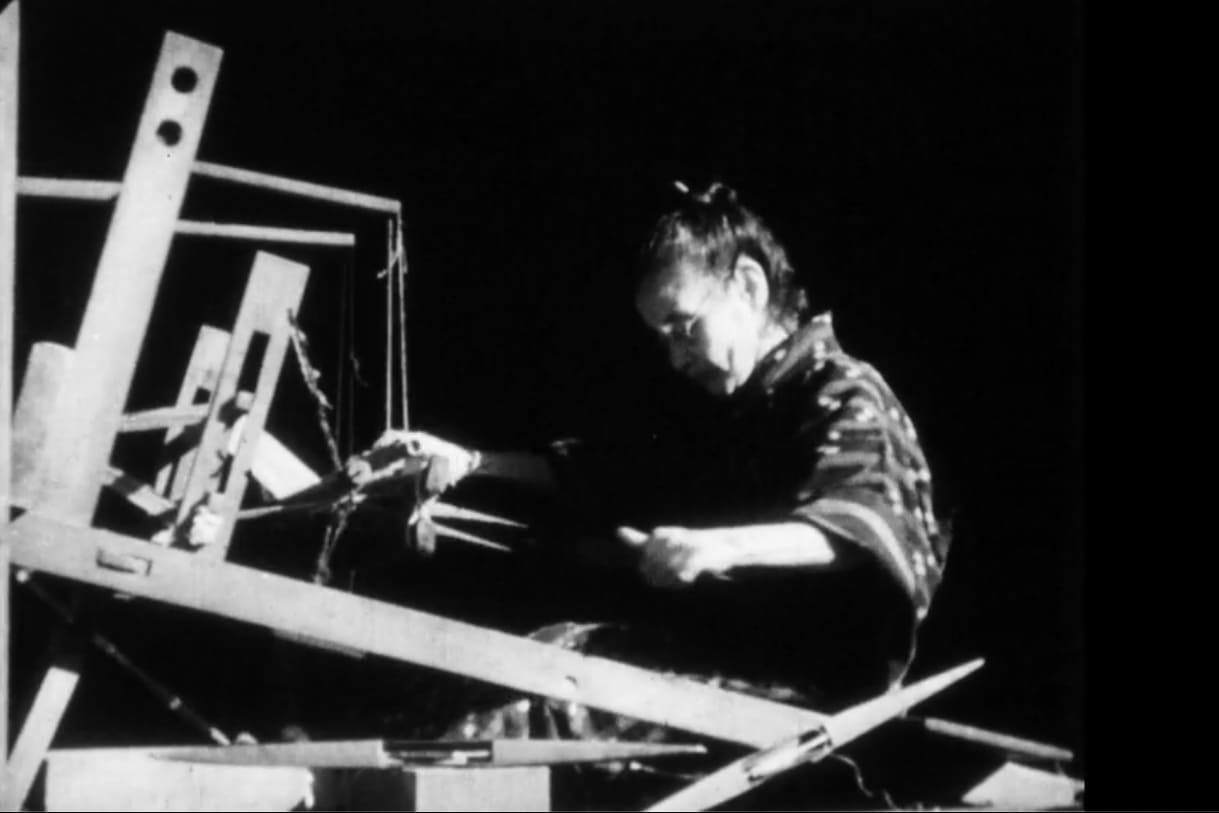 The Textiles of Okinawa carefully traces each step of bashofu production with commentary by textile artist Shukumine Kyoko, designated a Living National Treasure in 2023.
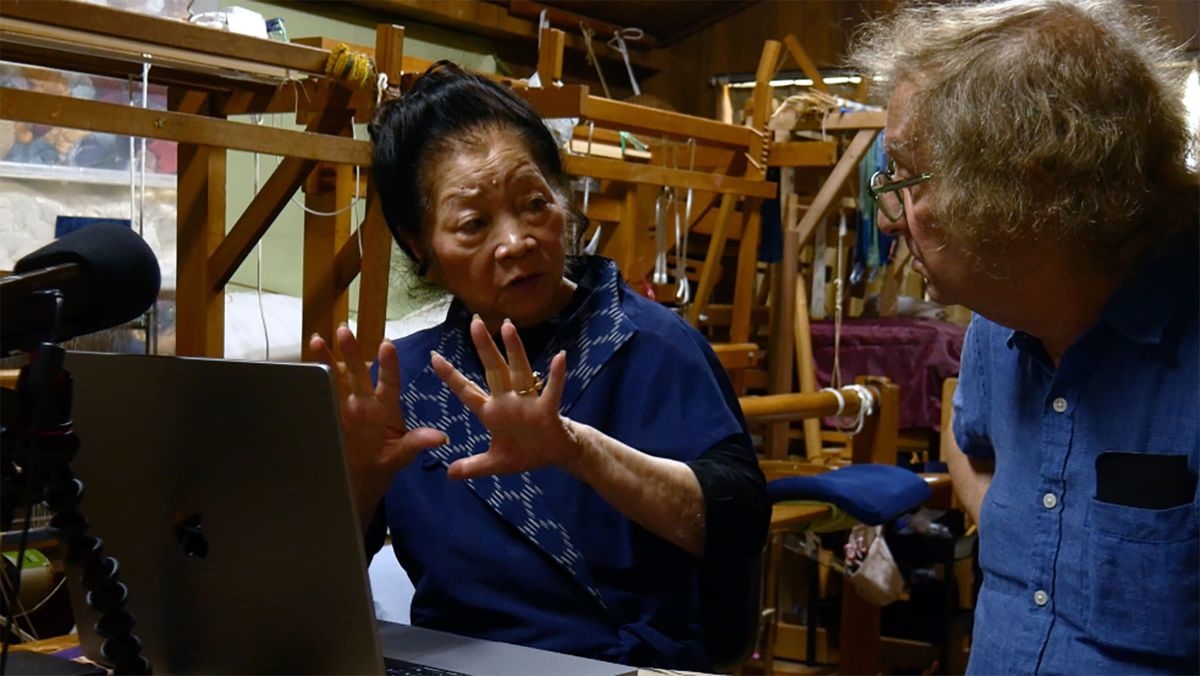 Shukumine (left) with Gross; a rare moment that reveals the stories behind the footage. (Photo from The Textiles of Okinawa)
Japanese Paper 1938 (Screening 4) restores a 1938 film produced by the Society for International Cultural Relations with added commentary by Sawamura Masashi, a leading maker of Mino washi (Japanese paper) and honorary chair of the Association for the Preservation of Hon-minowashi Papermaking. This work, too, was made with the cooperation of the Japan Foundation.
I was eager to speak with Sawamura once I learned about him, but I had no connections, so I went to the Mino Washi Museum in Mino, Gifu, and consulted the director. On that first visit, they didn't introduce me―perhaps they were worried I might rush to meet him and say something that would upset him. On my next visit, when they understood my project's aims, they kindly made the introduction. Once we began filming, Sawamura understood and offered many wonderful insights.
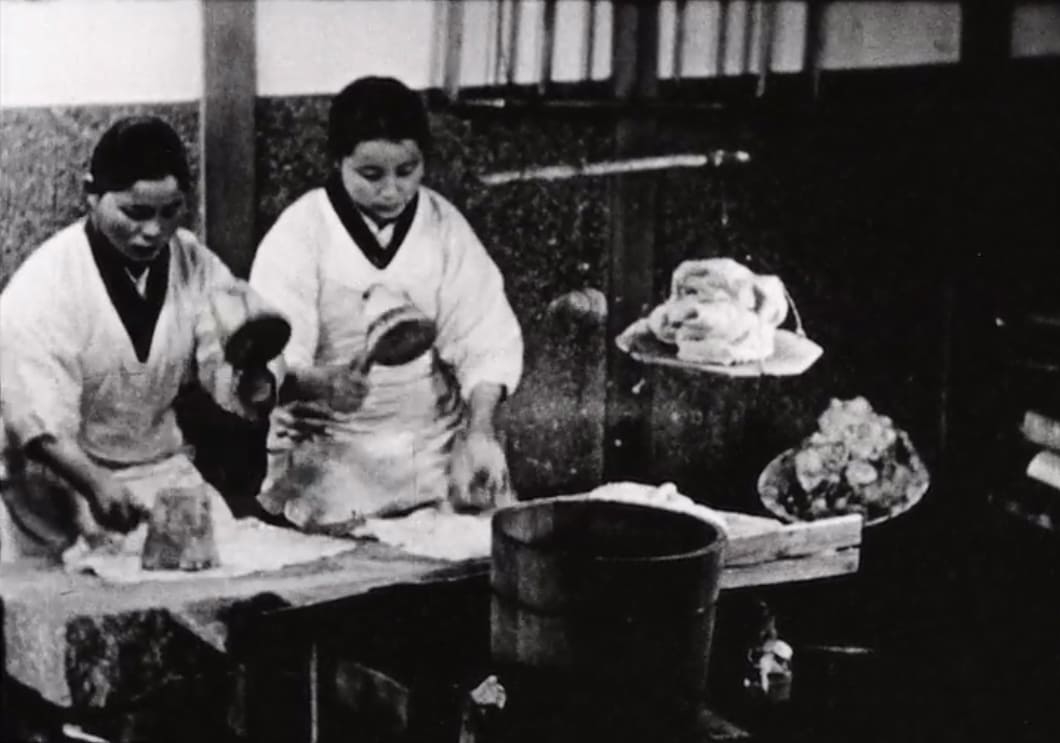
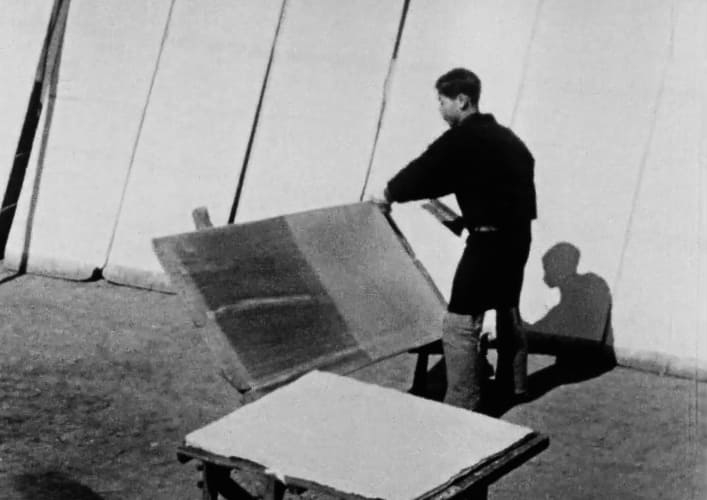
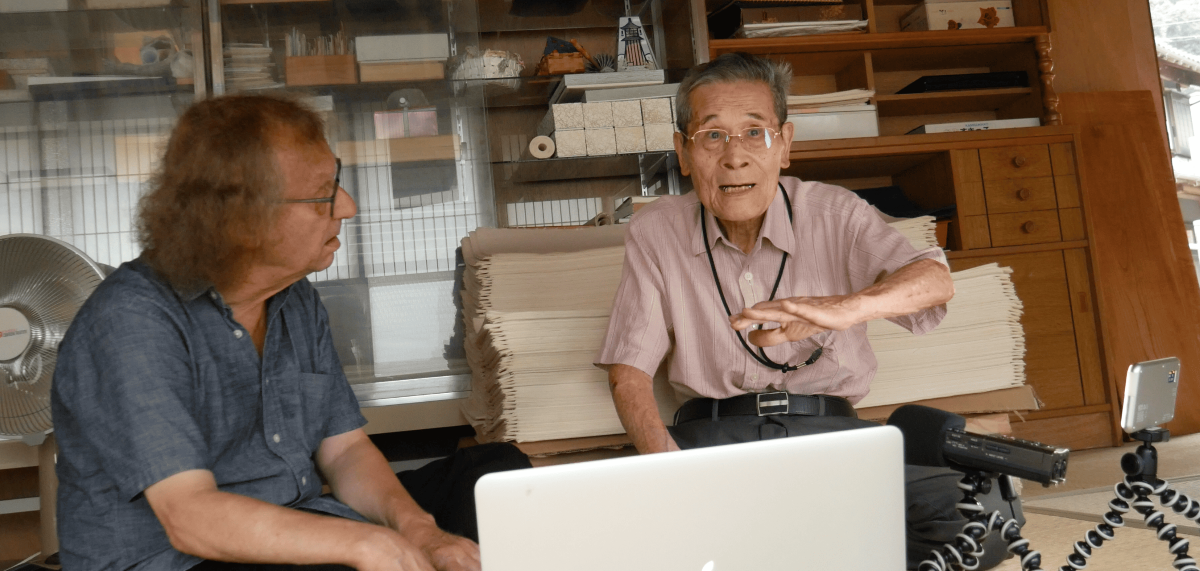 Watching the original footage while Sawamura Masashi explains the craft of Mino washi.
※All stills from Japanese Paper 1938.
Mr. Sawamura spoke at length, and Ms. Shukumine talked for a full two hours, not only about Okinawan textiles but also the Okinawan philosophy of life and humor. Japan is full of artisans who are superb storytellers. The craftsperson in How to Make a Cypress Wood Hat (Screening 5) is the same. Everyone has so many wonderful anecdotes that editing is always truly challenging.
Carrying the Archive Forward with Today's Practitioners
At the close of the lecture, Gross answered a question about his future plans.
"I still have a great many un-restored 16 mm films at my home in Canada. About one-third of Leach's film reels also remain, so I need to finish that work. It would be wonderful to have young craftspeople today watch the films that record commentary from Sawamura and other artisans, capture their reactions on film, and create other versions of the Mingei Film Archive. We've also received requests for French and Spanish editions of the archive, which we are currently considering. And I want to continue documenting Japan's time-honored handcrafts across the country. Thus far I've visited Mashiko, Nagano, Gifu, Tamba, Kyushu, Okinawa, and many other places, presenting old films and speaking with craftspeople. Just recently, I went to Tendo in Yamagata to cover shogi tile making. There are still so many fascinating crafts in Japan that I don't yet know. The path to compiling such a vast archive is a long one, and it would be impossible without irreplaceable collaborators."
Reference: Mingei Film Archive
https://mingeifilmarchive.com/
Related Articles
084 The 51st Japan Foundation Awards Report on the 2024 Japan Foundation Awards Ceremony


Related Events
Keywords
Back Issues
- 2026.3. 3 Busan as a Bridge: R…
- 2026.3. 3 Bridging 100 Years o…
- 2026.1.30 Crossing Borders thr…
- 2026.1.23 Weaving Memories of …
- 2026.1. 6 How Japanese-Languag…
- 2025.12.25 Peace Actions Envisi…
- 2025.9.30 The 51st Japan Found…
- 2025.9.30 The Japan Foundation…
- 2025.9.30 Bringing the World C…
- 2025.9.30 The 51st (2024) Japa…